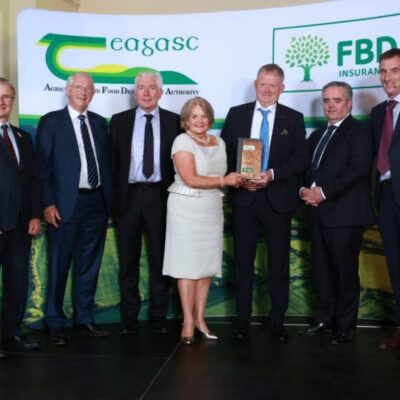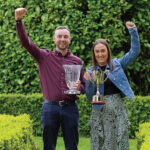
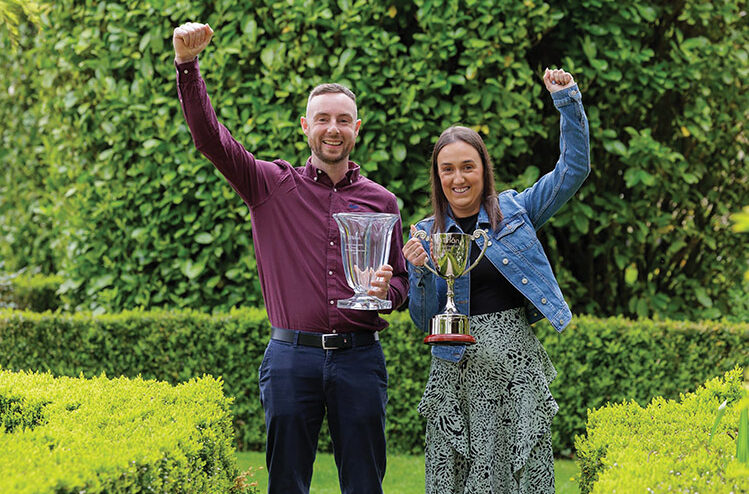
There was double delight for Shane and Kate Fitzgerald at the Tirlán Dairy & Sustainability Awards 2026 when they were named Tirlán Milk Suppliers of the Year and also received the Farming Ambassador Award.
Along with Shane’s parents, the young couple operate a highly-efficient grass-based system with around 200 spring calving Holstein Friesian cows in Portlaw, Co. Waterford. Passionate advocates for Irish dairy farming, they regularly open their farm to visitors and have hosted major public and international events highlighting sustainability, animal welfare and transparency.
As previous participants in the Tirlán / Teagasc Future Farm Programme for seven years, the Fitzgeralds have played a key role in sharing real-world data to support peer learning. Sustainability underpins every decision on the farm, balancing productivity with environmental protection and farmer wellbeing.
Recognising the long-standing commitment of Tirlán’s dedicated suppliers to delivering high-quality, sustainably produced milk, the Tirlán Dairy & Sustainability Awards were presented on Monday, April 27 last. In total, 12 award winners were honoured across a variety of categories, covering milk quality and milk solids to environmental stewardship and ambassadorship.
Speaking at the awards, Tirlán chairperson John Murphy commented: “Today is about recognising the hard work, care and commitment shown on family farms right across our regions.
“Our suppliers continue to set the standard in quality and sustainability, and that is something we are immensely proud of. Their dedication is what truly sets Irish dairy apart, both at home and on the global stage.”
Shane and Kate were both surprised and delighted with their double success which recognised their commitment to producing high-quality milk sustainably, while actively promoting the wider dairy sector in Ireland. The judges noted that sustainability and performance are central to their approach to farming, along with ongoing investment, strong grassland management and a clear focus on animal welfare.
“We were nominated for the Farming Ambassador Award and ended up winning two awards which we certainly weren’t expecting. It was a lovely surprise to get,” Shane proudly states.
“We’re all about portraying a positive image of farming, producing high-quality milk and protecting the environment. We now go forward to represent Tirlán at the NDC / Kerrygold Quality Milk Awards which recognise standards of excellence in dairy farming. It’s a huge honour in itself.”
The Fitzgeralds are no strangers to making headlines. In 2022, King Charles (then Prince Charles) visited their 270-acre dairy farm for a tour of the sustainability-focused enterprise. During the King’s visit, they demonstrated to him a number of measures they have taken to reduce their greenhouse gas (GHG) emissions and promote sustainability.
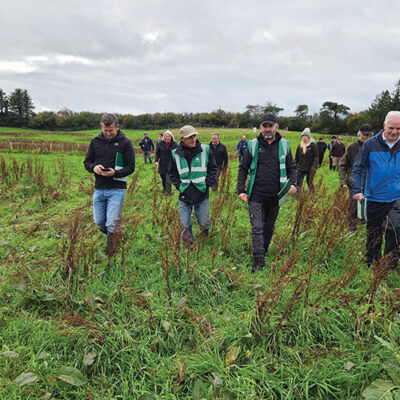
His Royal Highness was also given a number of demonstrations on the use of protected urea, multi-species swards, soil sampling as well as the use of drones in farm mapping. The King was suitably impressed with the use of the farm’s low emission slurry spreading (LESS) equipment and said he would like to see the use of the various environmentally-friendly methods become more widespread.
Shane and Kate run the award-winning farm along with Shane’s father John Fitzgerald and John Foran in the shadow of the picturesque Comeragh Mountains.
“We all get on really well,” Shane says.
“Kate and I do the milking, while my father and good friend John Foran look after the machinery and the maintenance of it. Dad transferred the farm over to me last year before I turned 35. He takes over the milking duties when we’re away which allows us to have a good work / life balance. None of us wants to be slaves to the farm. It’s set up in an efficient way so it’s an attractive place to work. Getting away motivates us and we’re more productive when we come back.”
Sustainability is at the heart of everything the Fitzgeralds do.
“We always focus on the three pillars – the economics, the environment and the social. We strive to get the balance between the three of them. We aim for a productive, profitable and contented herd while leaving room for nature, protecting water quality and reducing our emissions as well as having a work / life balance.
“It’s not always an easy thing to do but we’re showing it here on the farm – that they can go hand-in-hand. You can have a productive and profitable herd, make the farm sustainable and streamlined.”
One of 11 farms taking part in the Teagasc / Tirlán Signpost Future Farm Programme and also ambassadors for NDC (National Dairy Council), the Portlaw enterprise plans to consolidate its dairy herd number and to achieve an increase in milk solids production. All of the land, of which 110 acres is long-term leased, is available to the cows, while heifers are contract reared.
“The replacement heifer calves are kept on the farm for their first year and contract reared on another farm from March to October in their second year, while the male beef calves are sold at three-four weeks old. About 45 replacement heifers come into the herd every year,” the third-generation farmer explains.
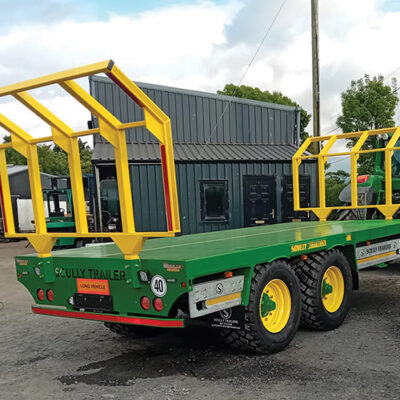
“We’re trying to be as self-sufficient as possible. We make our own silage and spread our own fertiliser and slurry. We’ve also reseeded in multi-species swards since 2021. In fact, we do everything ourselves except for making bales, and we only make a small amount of those.
“We have all our own equipment for carrying out the various tasks. Our main tractor is a John Deere 6150M which is supplemented by a John Deere 6430 and Ford TW-10. In addition, Dad has a couple of vintage tractors – a 1985-reg John Deere 2140 and a 1989-reg CASE International 785 – which are used as back-up.
“For making pit silage, we have a JF900 harvester, a Kuhn mower, a JCB 320S loading shovel and an assortment of trailers. Other equipment includes a Kuhn power harrow, an Amazone fertiliser spreader, a HiSpec 2,300-gallon slurry tanker with dribble bar and a Condon FeedAll diet feeder.”
The farm was a tillage, beef and dairy enterprise before Shane took over a decade ago.
“When I left school, farming wasn’t going well and my mother encouraged me to go down a different route. So I went to WIT (now SETU Waterford) to study for a degree in Business & Accountancy,” he continues.
“But I always wanted to come back into farming and did a Dairy Herd Management Course Level 6 in Kildalton in 2014. I got to do my placement in New Zealand which was a great learning experience. During my time in Kildalton, we did a five-year plan which showed dairy to be the most profitable farming sector.
“That prompted my father and I to drop tillage and beef, and concentrate on dairy. Over a five-year period, we increased the dairy herd from 120 to 200. We reared our own replacements. We also increased the paddock size and improved our facilities to make it a viable operation. It was all planned out.
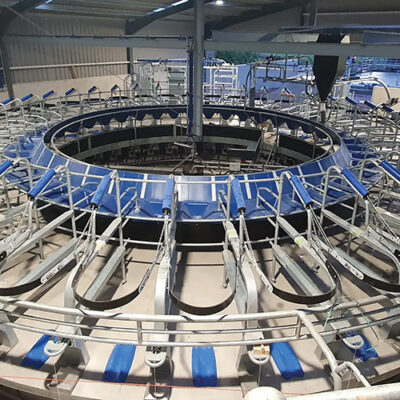
“We have a DeLaval 20-unit herringbone milking parlour which was installed in 1974 and has been extended over time. We’re now in the process of replacing it with a new state-of-the-art Dairymaster 26-unit herringbone parlour which is set up for 250 cows if the opportunity arises. It all depends on whether or not nitrates derogation is phased out. We want to consolidate what we have at the very least. We’re always planning ahead and adopting new technology and new farming methods.”
Shane notes how Kate is as hands-on in the running of the farm as he is.
“She does everything from milking to grass measuring. Kate comes from a suckler farm, but went away from farming for a while after her father – who she was very close to – passed away in 2017. But she came back into it full-time with me in 2021 and has played a big part in our growth and success.
“We work well together on-and-off the farm,” he concludes.
Fitzgerald Farm
Portlaw,
Co. Waterford.
First published in Irish Tractor & Agri magazine Vol 14 No 2, Summer 2026